

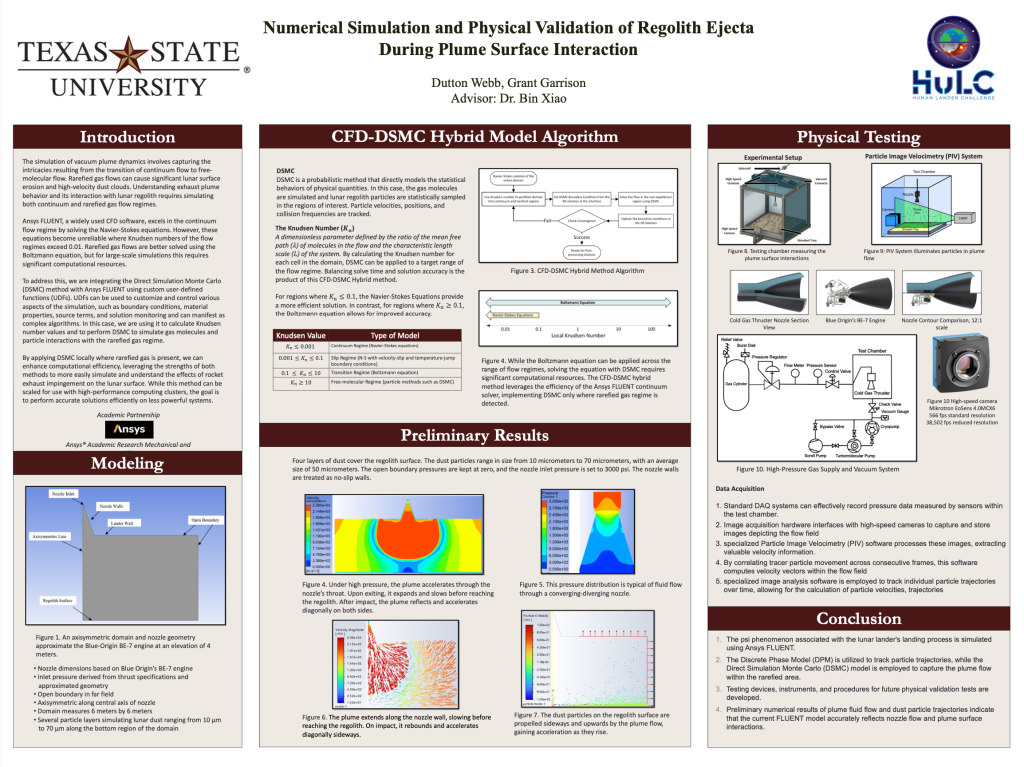
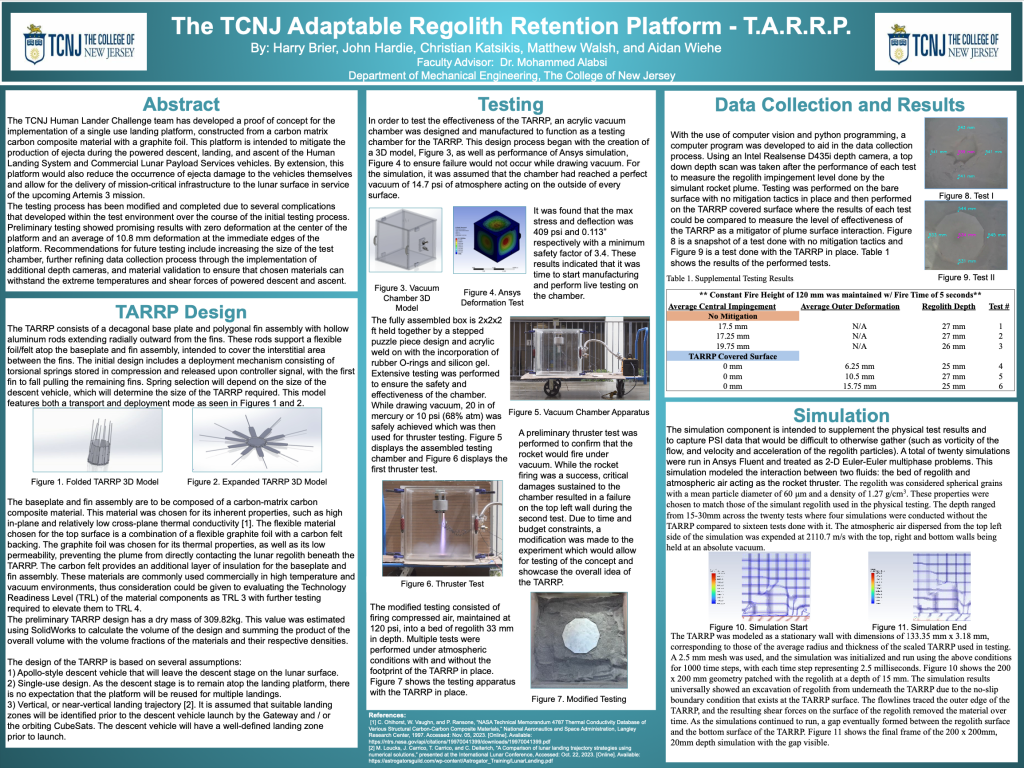
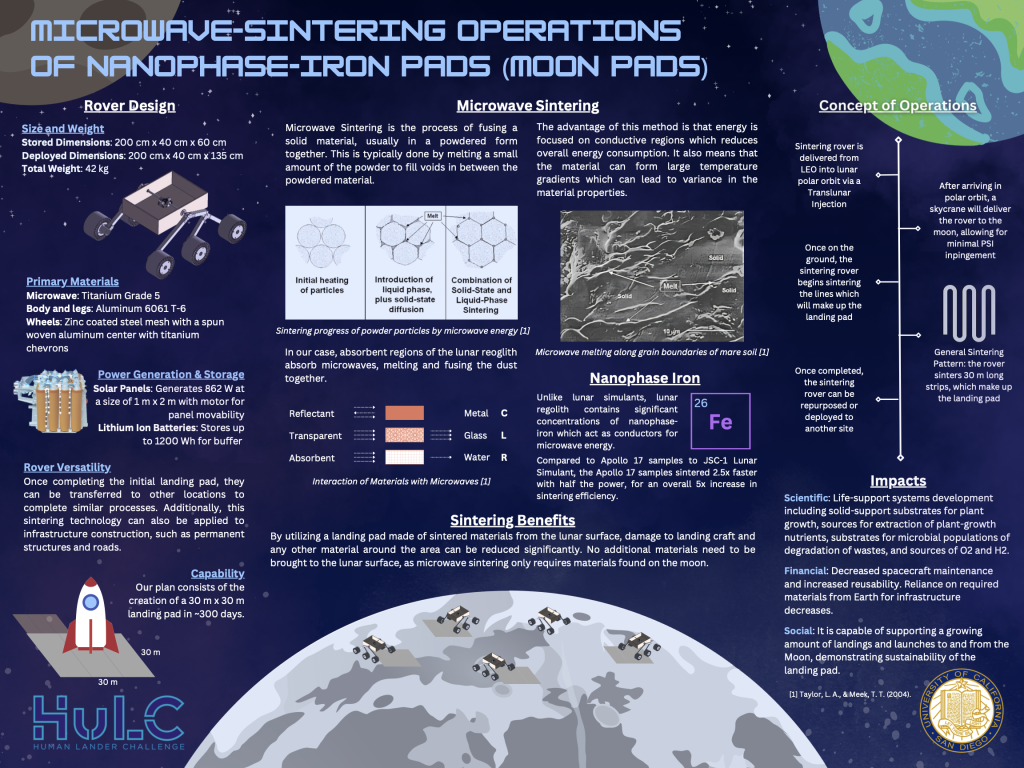


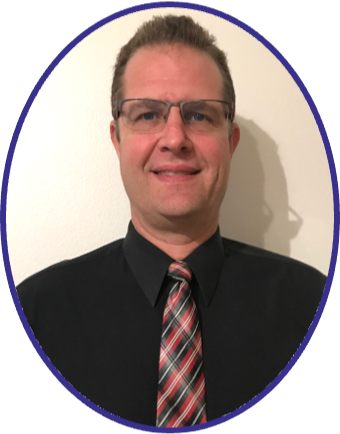



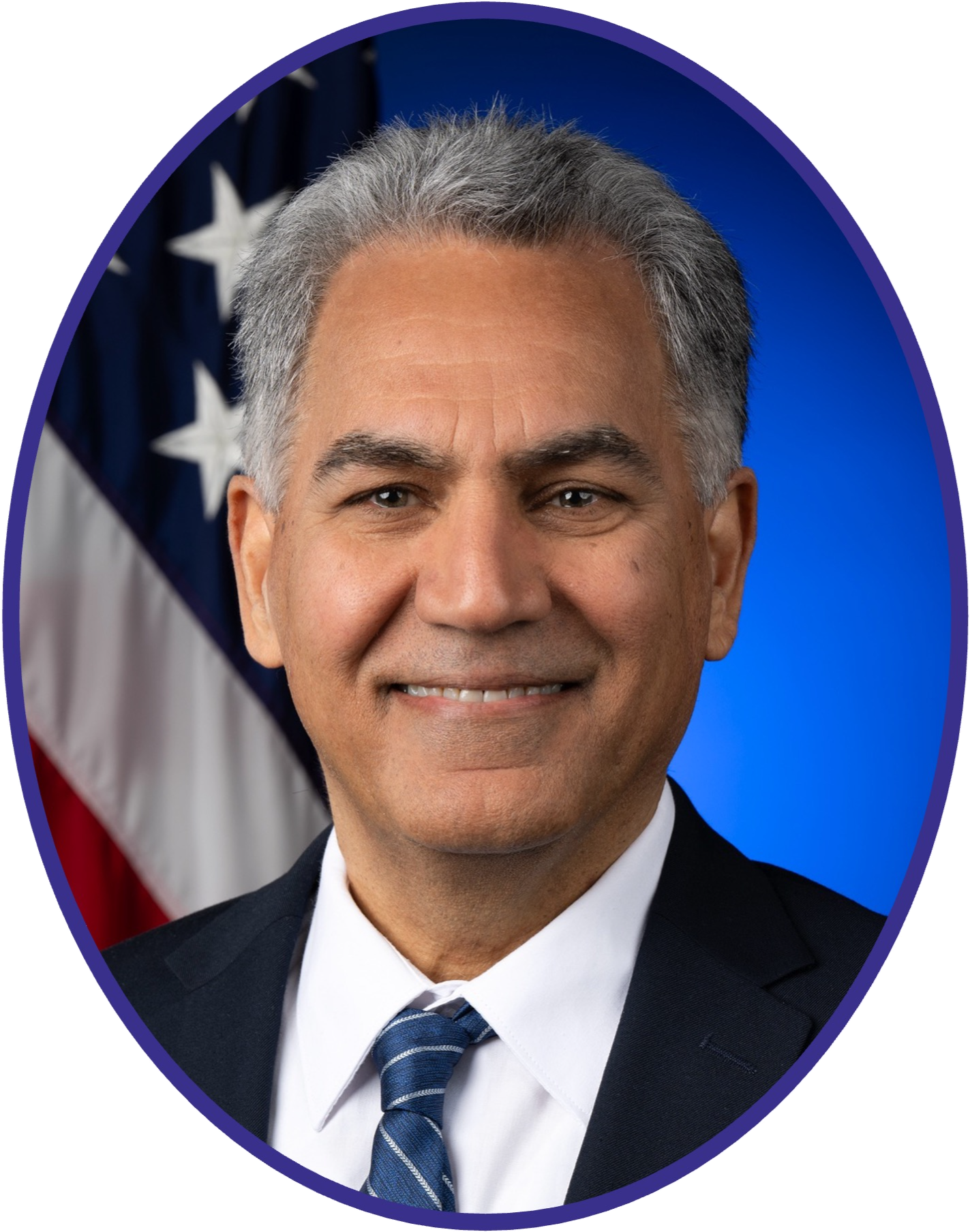
 Jamshid Samareh
Retired, NASA’s Langley Research Center
Jamshid Samareh retired from NASA’s Langley Research Center in late 2024. He was formerly a senior research aerospace engineer in the Vehicle Analysis Branch of NASA’s Langley Research Center. His research interests are in Entry, Descent, and Landing (EDL), mass modeling, multidisciplinary analysis and design optimization (MDAO), fluid-structure interaction, geometry modeling, and shape optimization.
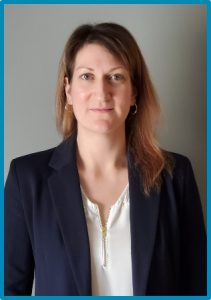 Ashley Korzun
NASA’s Langley Research Center
Dr. Ashley Korzun is an Aerospace Engineer at NASA Langley Research Center and Principal Investigator for NASA’s Plume‐Surface Interaction ground testing and capability development. Her primary specialization is in entry, descent, and landing aerosciences and systems, with an emphasis on technology development for propulsive descent and landing on the Earth, Moon, and Mars. Dr. Korzun has served as the Aerodynamics Lead for the successful InSight Mars lander mission and the LOFTID technology demonstration mission. She holds a B.S. in Aerospace Engineering from the University of Maryland and a M.S. and Ph.D. in Aerospace Engineering from Georgia Tech.
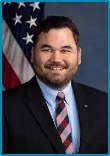 Matt Simon
NASA’s Langley Research Center
Dr. Matthew Simon currently serves as the Capabilities Integration Lead within the Exploration Systems Development Mission Directorate (ESDMD), where he supports ongoing NASA work to define technology needs for human lunar and Mars exploration missions. In addition to these roles, Dr. Simon has supported multiple other NASA projects on spacecraft design, habitation, medical capability development, radiation shelter design, strategic decision analysis, and technology portfolio characterization. He has an interest in progressing towards human settlement of space through the development of innovative concepts with large potential to enable future human exploration missions and improve the quality of life here on Earth. He received his Ph. D. in Aerospace Engineering from Georgia Tech in May 2016 with his thesis on automated spacecraft interior layout evaluation and design.
 Samantha Harris
NASA’s Marshall Space Flight Center
Samantha “Sam” Harris spent her childhood in Cincinnati, Ohio before moving to Alabama to pursue an undergraduate degree in Industrial and Systems engineering at the University of Alabama in Huntsville. As an undergrad, she happened upon a Pathways Internship with NASA Marshall Space Flight Center that eventually led to her first job chatting with astronauts aboard the International Space Station. While working various roles in flight control and ground team training for the ISS program, she earned a Master’s degree in Engineering Management. Since leaving the ISS program, she has served in project management functions for a variety of space technology development projects including green propulsion, deployable in-space power generation, Cryogenic Fluid Management and Plume Surface Interaction.
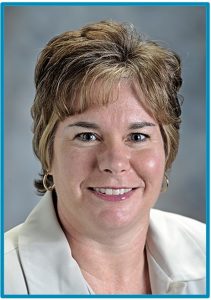 Michelle Munk
NASA’s Langley Research Center
Michelle Munk has been serving as the Chief Architect within NASA’s Space Technology Mission Directorate (STMD) since May 2022. In this role, Mrs. Munk is responsible for creating technology infusion paths to science and human exploration missions, and commercial industry. She works with NASA’s System Capability Leads and STMD Principal Technologists to identify gaps and investment strategies, and to prioritize investments across STMD’s capability areas. Mrs. Munk has over 30 years of experience in Entry, Descent and Landing flight hardware development and technology management from four different NASA centers. Mrs. Munk holds a B.S. in Aerospace Engineering from Virginia Tech and is an AIAA Associate Fellow.
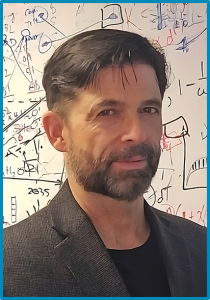 Philip Metzger
University of Central Florida
Dr. Philip Metzger is a planetary scientist and the director of the Stephen W. Hawking Center for Microgravity Research and Education at the University of Central Florida. He worked at NASA’s Kennedy Space Center for about 30 years, where he co-founded the KSC Swamp Works. He performs research related to solar system exploration: lunar mining, soil mechanics, rocket exhaust interactions with planetary surfaces, etc. He received the astronaut’s Silver Snoopy award in 2010, was selected as the Kennedy Space Center’s NASA Scientist/Engineer of the Year for 2011, received the ASCE Aerospace Division’s Outstanding Technical Contribution Award for 2016, and became a NASA NIAC Fellow in 2020. In 2021, The International Astronomical Union (IAU) named asteroid 36329 Philmetzger (2000 LU35) after him, citing his research into rocket exhaust blowing soil and efforts to protect the Apollo heritage sites from those effects.
 Manish Mehta
NASA’s Marshall Space Flight Center
Dr. Manish Mehta is a subject matter expert within the Aerosciences Branch at NASA’s Marshall Space Flight Center in Huntsville, Alabama. His main area of focus is aerothermodynamics, base aerodynamics and gas-granular flow physics and has been working in these disciplines for the last 20 years. Dr. Mehta has worked multiple technical disciplines within aerosciences for the Space Launch System (SLS) Program and currently is the induced environment disciple lead engineer for the Human Landing System (HLS) Program. He received his doctorate in engineering from the University of Michigan in 2010.
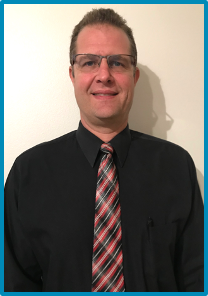 Mark Lewis
NASA’s Kennedy Space Center
Mark Lewis received a B.S. in Electrical Engineering from Cleveland State University. Mr. Lewis is a systems engineer at NASA Kennedy Space Center (KSC) and has over 30 years of experience at NASA working on numerous research and spaceflight projects at Glenn Research Center (GRC) and at KSC. He has research experience in the development of damage detection and health management systems, and various types of gas sensors for use in launch system operations, spaceflight experiments, and biomedical applications. His flight hardware development experience includes satellite servicing and microgravity physical science experiments. Mr. Lewis is listed as an inventor on seven patents and received the NASA Silver Achievement Medal in 2018.
 Lora Dishongh
Booz Allen Hamilton
Born and raised in rural Indiana, Lora Dishongh was invited to the University of Houston as a National Merit Scholar. She earned a Bachelor of Science in Mechanical Engineering, Summa Cum Laude, before joining the US Navy to serve as an instructor at the Naval Nuclear Power Training Command. After one tour of duty, she returned to the Houston area to pursue a career at the Johnson Space Center. Lora has worked in various project and systems engineering roles in the twenty years since. She has built hardware for biological monitoring and exercise activities aboard the International Space Station, written test requirements and performed integration activities for the Orion Multi-Purpose Crew Vehicle, and led teams of various sizes with far-flung membership. Lora currently works for Booz Allen Hamilton, and serves NASA’s Lunar Architecture Team as the Artemis IV Surface Planning Analysis Lead and curator of the publicly-released Lunar Surface Data Book.
 Wesley Chambers
NASA’s Marshall Space Flight Center
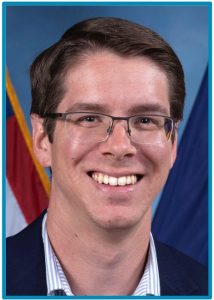
Dr. Wesley Chambers is a physicist working at NASA’s Marshall Space Flight Center. His research interests include planetary surface environments and the gas-granular physics of rocket plume-surface interactions. He is Deputy Principal Investigator for the Plume-Surface Interaction Project, Principal Technologist for Stereo Cameras for Lunar Plume Surface Studies (SCALPSS), a plume-surface interaction flight instrument, and a member of the Human Landing System Natural Environments team. Wesley earned an A.A. from Seminole State College of Florida and a B.S. and Ph.D. from the University of Central Florida.
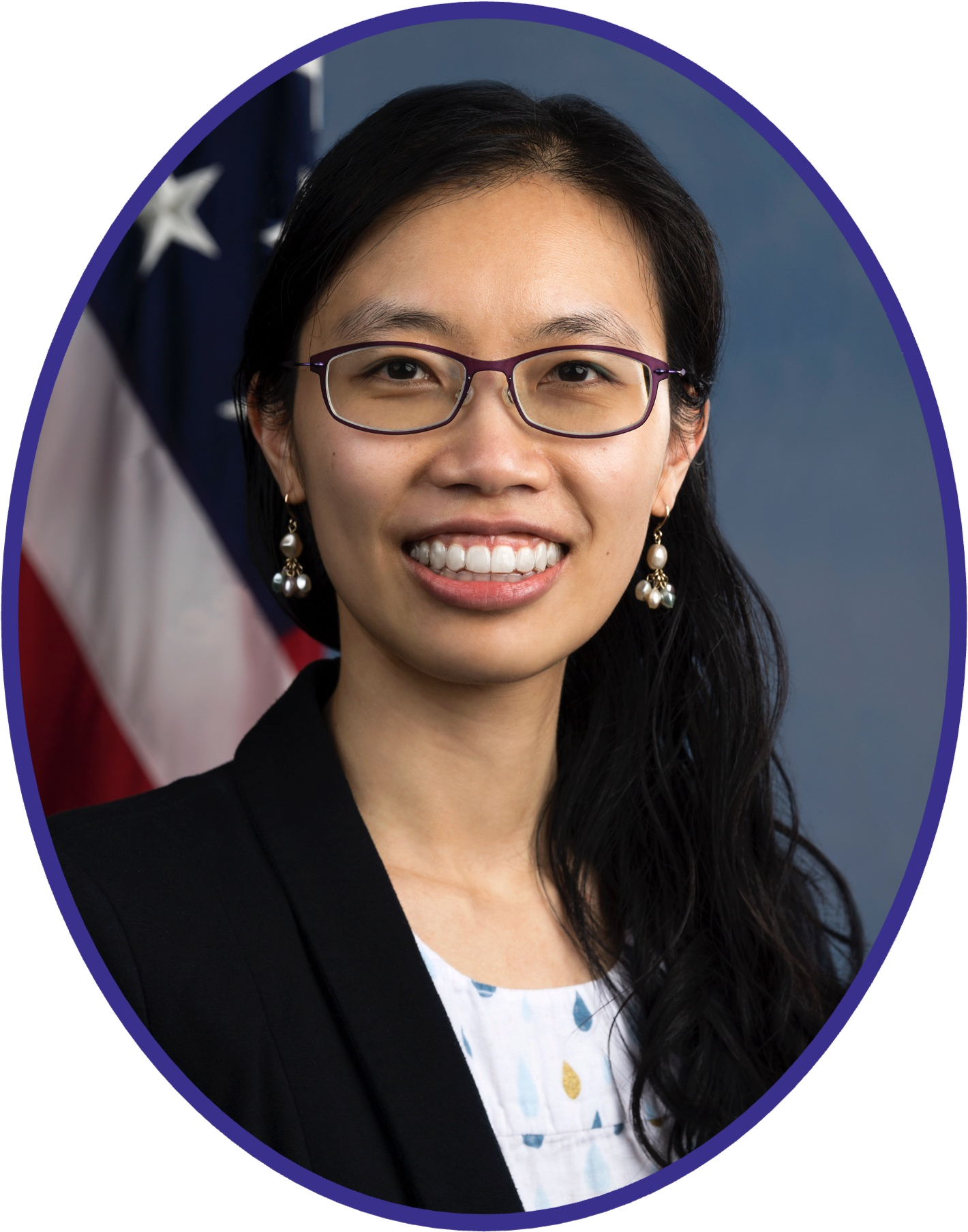
 Esther Lee
2025 Co-Chair, Sponsor
NASA’s Langley Research Center
Esther Lee earned her B.S. and M.S. degrees in Mechanical & Aerospace Engineering from Rutgers University and University of California, Davis. She began her career at NASA’s Langley Research Center in 2014. Her contributions span a diverse range of space exploration projects, including the Space Launch System, Human Research Program, and Human Lander System. She emphasizes a systems thinking approach in her work, considering the broader implications and interdependencies within complex projects while leveraging her knowledge in flight mechanics, aerothermodynamics, and model-based systems engineering. Drawing on her experience as former team lead of the navigation sensors technology assessment team and her current role as Proposal Manager, Esther is dedicated to fostering innovation and informed decision-making in technologies that advance space exploration and improve life on Earth. Beyond her professional endeavors, she enjoys exploring her creativity through art, gardening, and engaging in STEM outreach. She is excited to witness the ingenuity and talent of the HuLC students.