




 Monica Guzik
NASA’s Glenn Research Center
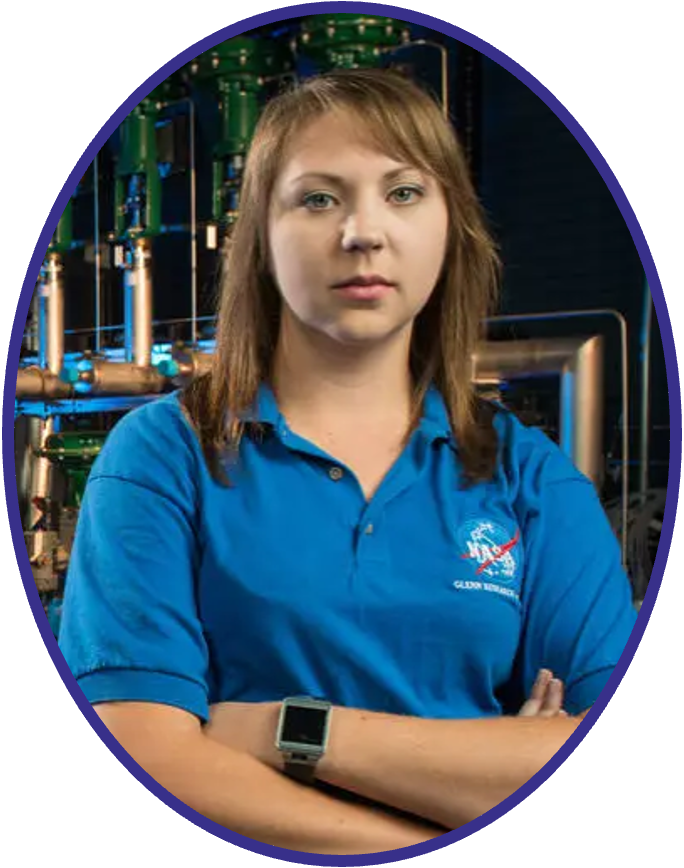
Monica Guzik is the Chief Engineer of the Gateway Power and Propulsion Element (PPE) at the NASA Glenn Research Center (GRC) in Cleveland, Ohio. She is a graduate of Rose-Hulman Institute of Technology with a B.S. in Chemical Engineering and a minor in German Language. Prior to her role on PPE, Monica served a 14-month detail within the Office of the Chief Engineer at NASA Headquarters as the Space Technology Mission Directorate (STMD) Deputy Chief Engineer. She has also served as the Chief Engineer for the Fission Surface Power project, the Hybrid Thermally Efficient Core (HyTEC) project, and the Flow Boiling and Condensation Experiment (FBCE) for the International Space Station. Prior to joining the Chief Engineer’s office, Monica had over ten years of experience in the Fluids and Cryogenics Systems branch at GRC, where she focused on in-space cryogenic fluid management and fuel cell power systems. Monica is currently a deputy on the NASA Engineering and Safety Center’s Cryogenics Technical Discipline Team. She was honored by the Agency with the NASA Silver Snoopy Award in 2022 for her work on FBCE, as well as the Early Career Achievement Medal in 2016 and the Silver Achievement Medal in 2017. In her free time, she enjoys participating in community STEM outreach, playing soccer, traveling, visiting theme parks, and enjoying Cleveland’s extensive music scene.
 Juan Valenzuela
NASA’s Marshall Space Flight Center
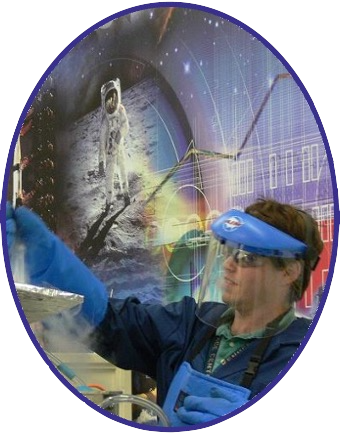
Juan Valenzuela received his B.S and M.S in Mechanical Engineering from the University of Texas at El Paso. He has been an aerospace engineer for NASA since 2012. During his 12 years at NASA, he has served as vacuum chamber test engineer, cryogenic fluids analyst and cryogenic fluid management product lead, responsible for the technology development of in-space cryogenic hardware. He currently serves as the Human Landing Systems (HLS) main propulsion systems (MPS) sub-system lead, responsible for overseeing insight on non-main engine propulsion systems of the next lunar landers.
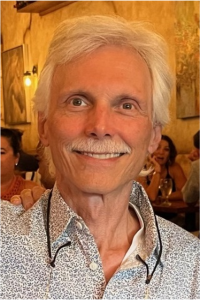 Mark Wollen
Innovative Engineering Solutions
Mark Wollen graduated from CWRU with MS/BS degrees in Mechanical and Aerospace Engineering in 1980/82. After an early period at General Dynamics in San Diego, working Atlas/Centaur evolution, National Aero Space Plane (NASP), and other advanced space programs, he went on to co-found Innovative Engineering Solutions (currently serving as the Chief Technical Officer), and has spent most of his career working as a consultant on cryogenic propellant management techniques for space launch vehicles. Recognized areas of expertise include: cryogenics and low/zero gravity fluid mechanics, free surface flows, propellant tank thermodynamics, cryogenic propulsion systems, and testing techniques and specialized instrumentation for these topics. Over the last 40+ years Mr. Wollen has contributed to various design and development activities for most of the liquid propellant launch vehicle systems currently in use in the United States.
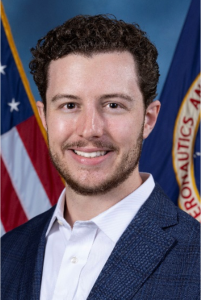 Reid Ruggles
NASA’s Marshall Space Flight Center
Reid Ruggles is the NASA HLS Propulsion Discipline Lead Engineer, leading the NASA propulsion engineering team in evaluating both SpaceX’s HLS Starship and Blue Origin’s Blue Moon propulsion system designs and procedures to safely land the next American astronauts on the lunar surface and establish a sustained presence on the Moon. The HLS Propulsion Team includes main engines, main propulsion systems / cryogenic fluid management, reaction and attitude control systems, gas storage and generation systems, and all supporting lines, valves, and other components. Reid received his B.S. in Aerospace Engineering from The University of Alabama and his M.S. in Aerospace Engineering from Georgia Tech. Prior to joining the HLS team in 2022, Reid supported NASA’s Commercial Crew Program as a Main Propulsion Systems Engineer for Falcon 9 and Atlas V and served as the CCP Deputy Lead Engineer for Falcon 9. He directly supported the return of human launch capability to the United States with SpaceX’s DM-2 mission, as well as certification, maintenance, and flight operations of reused Falcon 9 first stage boosters starting with the Crew-2 mission.
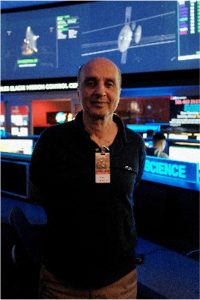 Ali Kashani
MEI Company
Dr. Ali Kashani has over 40 years of experience in thermal sciences. His work includes research and development of reduced and zero boil-off propellant systems, pulse tube cryocoolers, low-temperature regenerators, magnetic and helium dilution refrigerators. He is currently supporting the development of cryogenic technologies for NASA’s Human Landing Systems. He has worked on several NASA flight projects: Starling, VIPER, SHOOT, GP-B, SOFIA, BioSentinel, Astrobee, and Astro-H. He is a member of NASA Engineering & Safety Center Technical Discipline Team for cryogenics!
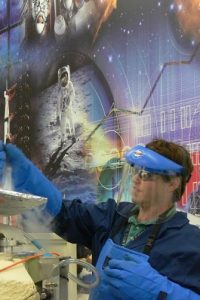 Wesley Johnson
NASA’s Glenn Research Center
Wesley Johnson received a bachelor’s degree in aerospace engineering from Auburn University in 2007 and a master’s degree from the University of Central Florida in 2010. Mr. Johnson began his career at NASA Kennedy Space Center as a Cooperative Education Student in 2004 working in the Cryogenics Test Laboratory where he spent over nine years developing advanced cryogenic technologies as well as trouble shooting problems on the Space Shuttle. He moved to NASA Glenn Research Center in 2014 to continue his research in cryogenic fluid management where he is the Cryogenics Team Lead in the Fluid and Cryogenic Systems Branch. His current research interests include thermal characterization of insulations as systems as well as collaboration with multiple projects focusing on cryogenic fluid system design, analysis, and testing. He was the Principle Investigator for the large scale liquid hydrogen testing effort: the Structural Heat Intercept, Insulation, and Vibration Evaluation Rig (SHIIVER) and the oxygen liquefaction demonstration Cryogenic Fluid In-situ Liquefaction for Landers (CryoFILL).
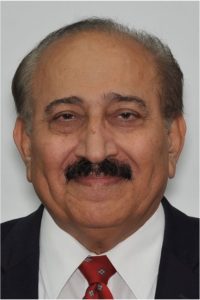 Ali Hedayat
NASA’s Marshall Space Flight Center
Ali Hedayat has over 34 years of experience of governmental and industrial experience in development of thermal/fluid modeling, design, and testing of propulsion systems. He Joined NASA Marshall Space Flight Center in 2002. He is the Lead for the In-Space Propulsion Systems Modeling Team in the Spacecraft and Vehicle Propulsion Branch at NASA MSFC. He has provided technical leadership, guidance, and mentoring to the team members on development of new technology and analysis tools for in-house and Industry projects. His areas of interest include thermal/fluid modeling of cryogenic fluid management and main propulsion systems. He received his Ph.D. in Mechanical Engineering from the University of Tennessee.
 Michael Dipirro
NASA’s Goddard Space Flight Center
Michael Dipirro joined NASA/ Goddard Space Flight Center in 1980 after receiving a PhD in Low Temperature Physics and serving one year as a post-doc at NIST in Gaithersburg. He has worked on a number of NASA’s cryogenic astrophysics missions including the Cosmic Background Explorer (1980-1990), Spitzer Space Telescope (1985-2003), and James Webb Space Telescope (2006-2021). In between he was the Principal Investigator for the Superfluid Helium On-Orbit Transfer Flight Demonstration (1984-1993) which successfully demonstrated the microgravity transfer of liquid helium in the superfluid state. He also has several patents on low temperature technology as well as over 100 published papers on the subject.
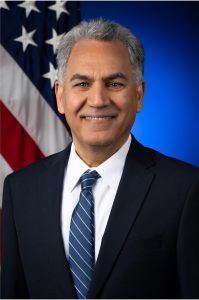 Jamshid Samareh
Retired, NASA’s Langley Research Center
Jamshid Samareh retired from NASA’s Langley Research Center in late 2024. He was formerly a senior research aerospace engineer in the Vehicle Analysis Branch of NASA’s Langley Research Center. His research interests are in Entry, Descent, and Landing (EDL), mass modeling, multidisciplinary analysis and design optimization (MDAO), fluid-structure interaction, geometry modeling, and shape optimization.
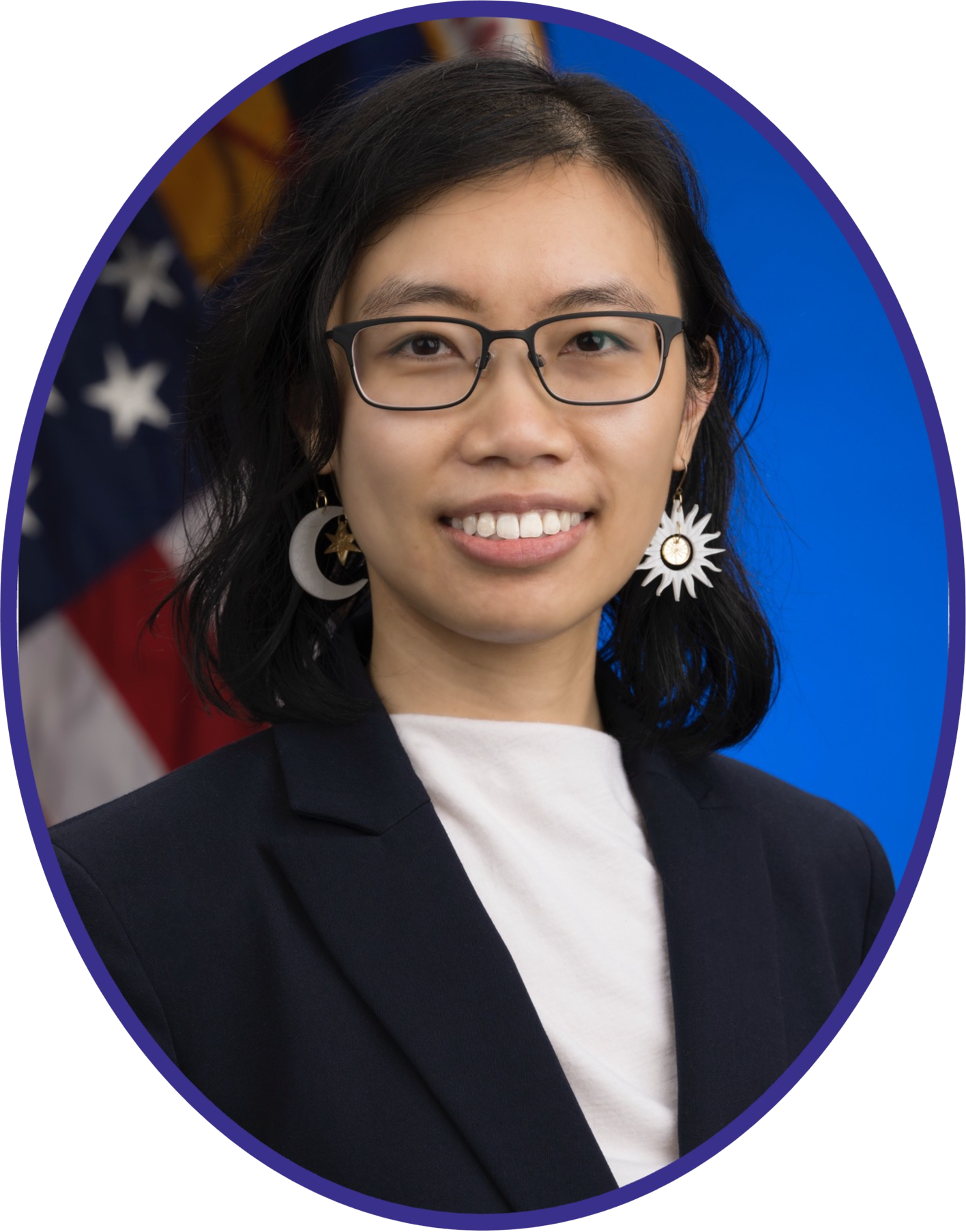
 Esther Lee
2025 Co-Chair, Sponsor
NASA’s Langley Research Center
Esther Lee earned her B.S. and M.S. degrees in Mechanical & Aerospace Engineering from Rutgers University and University of California, Davis. She began her career at NASA’s Langley Research Center in 2014. Her contributions span a diverse range of space exploration projects, including the Space Launch System, Human Research Program, and Human Lander System. She emphasizes a systems thinking approach in her work, considering the broader implications and interdependencies within complex projects while leveraging her knowledge in flight mechanics, aerothermodynamics, and model-based systems engineering. Drawing on her experience as former team lead of the navigation sensors technology assessment team and her current role as Proposal Manager, Esther is dedicated to fostering innovation and informed decision-making in technologies that advance space exploration and improve life on Earth. Beyond her professional endeavors, she enjoys exploring her creativity through art, gardening, and engaging in STEM outreach. She is excited to witness the ingenuity and talent of the HuLC students.