

 BettyLynn Mason
NASA’s Marshall Space Flight Center
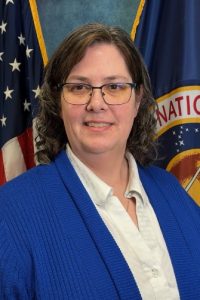
BettyLynn Mason has proven her passion for advancing human spaceflight through her nearly 18 years as an ECLS (Environmental Control and Life) Engineer. After graduating from Washington University in St. Louis with her BSME (Bachelor of Science in Mechanical Engineering), BettyLynn worked at Johnson Space Center as a contractor in various roles including ETHOS (Environmental and THermal Operating Systems) Flight Control Instructor, ISS (International Space Station) ECLS (Environmental Control and Life Support) Sustaining Engineer, and ISS ECLS Sustaining Air Revitalization Subsystem Manager. BettyLynn transitioned to Northrop Grumman (NG) as the Commercial Low Earth Orbit (LEO) Destination (CLD) ECLS Engineering Lead where she led the effort to design the ECLS architecture for the NG space station and where she matured designs of various regenerative systems including a trace contaminant removal system, carbon dioxide removal system, etc. While working at NG, BettyLynn began pursuing her MSEM (Master of Science in Engineering Management) at Arkansas State University. In 2024, BettyLynn accepted a civil servant position at Marshall Space Flight Center (MSFC) in the ECLS Design and Development branch where she began working with Four Bed CO2 Scrubber sustaining engineering personnel as a SME (Subject Matter Expert). BettyLynn completed her MSEM in 2025 and transitioned to the HLS CrewCo (Human Landing System Crew Compartment) Office where she currently provides her unique insights as the Deputy Technical Integration Manager – SpaceX.
 Arthur Brown
NASA’s Marshall Space Flight Center
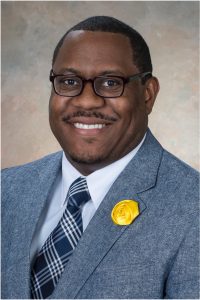
Arthur Brown is the ECLSS Architecture and Strategy Lead at NASA’s Marshall Space Flight Center. In this role, he leads the development of exploration-ready ECLSS strategy at MSFC, with a focus on system architecture, subject-matter expert development, new project formulation, and strategic partnerships.
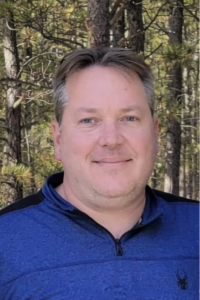 Chris Brown
NASA’s Johnson Space Center
Chris Brown works within the ISS Exploration Development Office to assist in advancing Environmental Control and Life Support Systems (ECLSS) for exploration and demonstrating these improvements on ISS. Chris was formerly an Environmental and Thermal Operation Systems (ETHOS) officer within the Flight Operations Directorate, markedly supporting ECLSS water systems such as Water Processor Assembly, Water Storage System, Urine Transfer System development, and solving problems associated with on-board fluid systems integration. Chris supported ISS construction and operation from ISS Increment 7 to present and was key in the commissioning of the ISS Regen ECLSS systems and proposing the need for the Water Storage System (WSS). Chris has also been an EECOM key point-of-contact for the Commercial Crew, Gateway, and Human Lander System (HLS) Programs. Chris developed and authored the majority of ISS fluid transfer techniques and procedures.
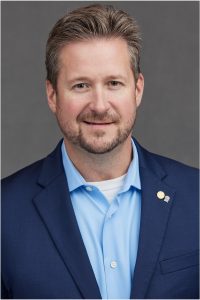 Steve Balistreri
The Boeing Company
Steve Balistreri is an expert in the field of Environmental Controls & Life Support Systems (ECLSS). He serves as the ECLSS Architect and Technical Lead Engineer for the Boeing Space Exploration Team in Houston, TX. He has over 25 years of hands-on experience supporting in-space vehicles, including 20 years designing, building, and supporting the International Space Station (ISS). Steve leads the ECLSS hardware anomaly resolution board for the ISS Program as well as being a Hardware Material Review Board member. Current efforts include leading R&D efforts on advanced life support systems and developing architectures for future habitats. Steve was born and raised in Wisconsin, and earned his Bachelor’s in Aerospace Engineering & Mechanics from the University of Minnesota.
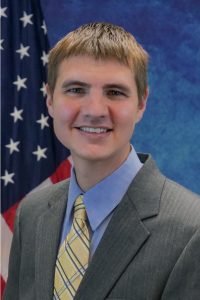 Zach Bryant
NASA’s Marshall Space Flight Center
Zach Bryant is one of the Environmental Control and Life Support System (ECLSS) Assistant Chief Engineers at NASA’s Marshall Space Flight Center (MSFC) in Huntsville, AL, where he helps lead the development and integration of life support systems for future human exploration missions. He began his NASA career at Johnson Space Center (JSC) in Houston, spending five years in the International Space Station (ISS) Mission Evaluation Room (MER) supporting ISS ECLSS. There, he focused on hardware sustaining and future system upgrades while providing real-time engineering support to the ISS Flight Control team. In 2019, Zach moved to MSFC and worked in ISS Payload Operations as a PAYCOM crew communicator, acting as the link between ground teams and ISS crew members to ensure successful execution of science and technology payloads. In 2022, he transitioned to the MSFC Habitation Systems Development Office as ECLSS integration lead for future habitat development, working across disciplines to mature requirements, understand interdependencies, and advance integrated architectures for long-duration missions to the Moon and Mars. In 2025, Zach joined MSFC’s Chief Engineers Office contributing to ECLSS hardware development and working with the ECLSS Integrated Product Team (IPT) on strategies for future exploration life support systems.
 Kaitlin Oliver-Butler
NASA’s Marshall Space Flight Center
Kaitlin Oliver-Butler is an ECLSS technology development engineer working for the Environmental Control and Life Support Systems Development Branch at Marshall Space Flight Center. She specializes in air revitalization, making sure that astronauts have a breathable and safe cabin atmosphere. She currently works sustaining engineering for the ISS Oxygen Generation Assembly (OGA), which involves analyzing flight data, working with the OGA team to track status and issues, and running the ground testbed OGA to provide additional data to support the ISS. She also leads development projects aiming to recover oxygen from metabolic carbon dioxide, with a focus on Bosch technologies. She has worked on projects across the full span of technology maturity, from sustaining engineering and flight hardware testing all the way down to creating project proposals for next-generation ECLSS technologies.
A native of Central City, KY, she earned her bachelor’s degree in mechanical engineering from Western Kentucky University, where she was active with IEEE and ASME. She attended graduate school at the University of Tennessee, Knoxville, where she earned a masters and doctorate in mechanical engineering, specializing in flexible robotics, and published papers in IEEE journals. Kaitlin enjoys reading, baking, being outdoors, serially dabbling in crafts, and cracking jokes with her friends and family.
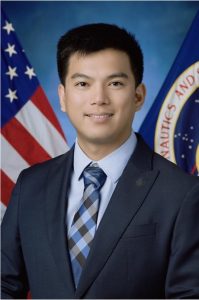 Leon Chen
NASA’s Johnson Space Center
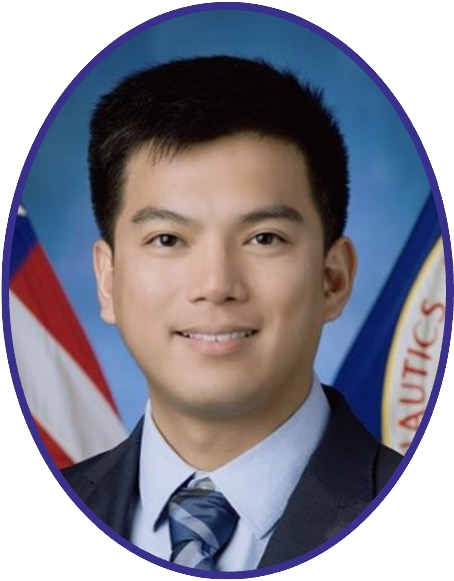
Dr. Leon Chen is a systems engineer, NASA-certified console operator, and internationally recognized leader in Environmental Control and Life Support Systems (ECLSS) for human spaceflight. He currently serves as the NASA ISS and Commercial Low Earth Orbit Development Program (CLDP) ECLSS Subsystem Manager, where he is responsible for sustaining life-support capability aboard the International Space Station (ISS) while leading the transition to next-generation commercial space stations. Leon leads multi-disciplinary engineering teams that oversee the design, development, testing, certification, and delivery of critical ECLSS subsystems, with a particular focus on water processing and oxygen recovery. He directs technical integration, verification, and validation across NASA, commercial partners, and international contributors, evaluating flight-readiness evidence to ensure every system meets stringent human-rating requirements. He also actively manages cost, schedule, and technical risk across ISS and CLDP programs, ensuring long-term sustainability without compromising crew safety or operational reliability.
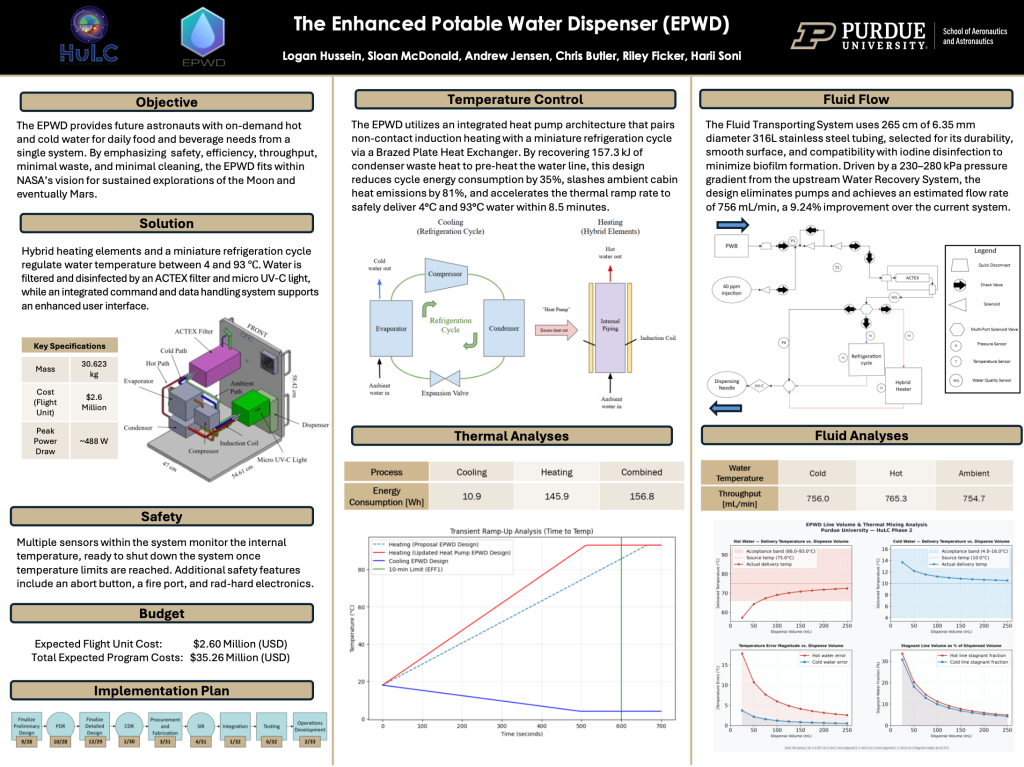
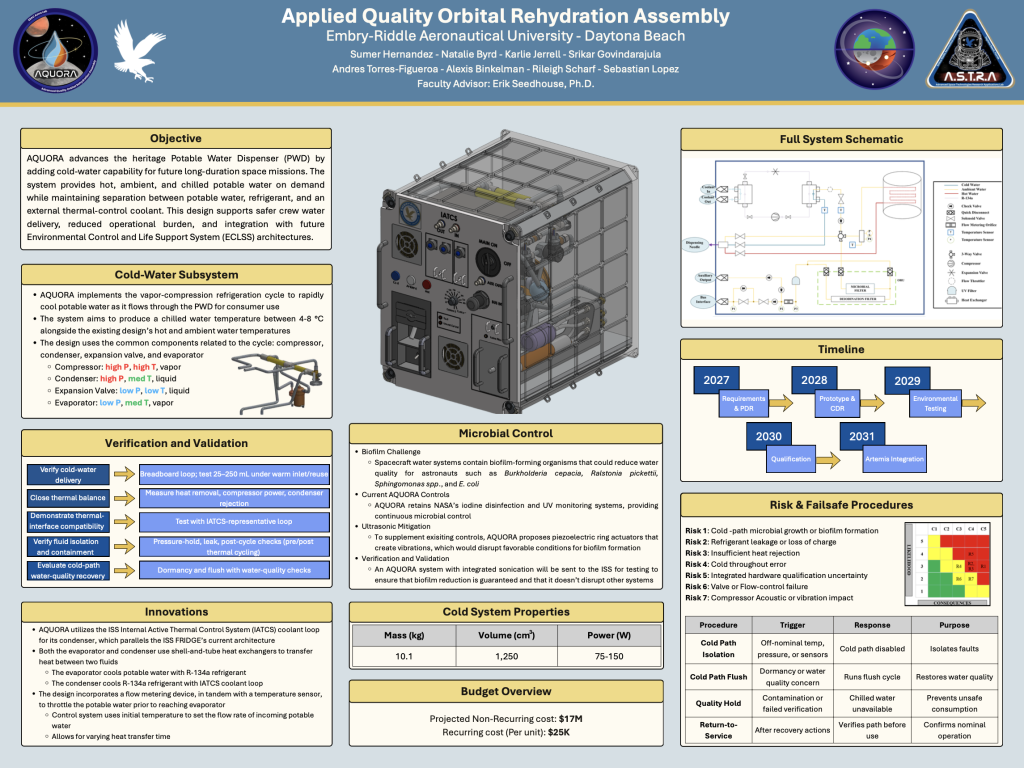
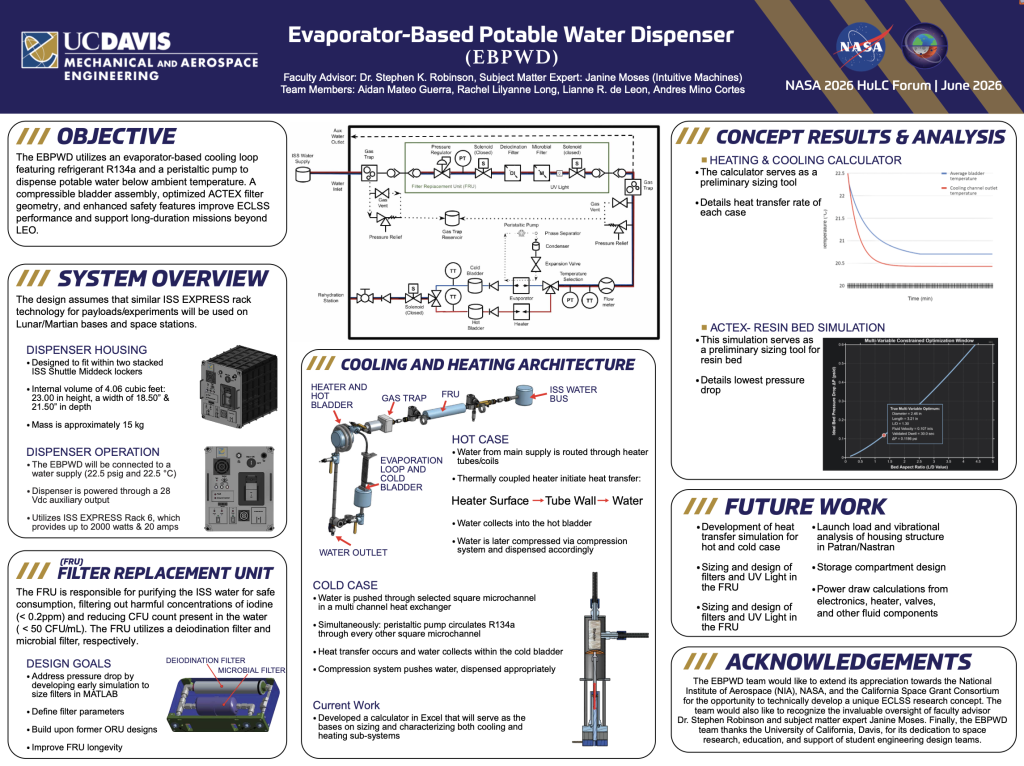
A core element of Leon’s portfolio is advancing exploration-class life-support technologies, including exploration water dispenser, Sabatier reactors, and associated CO₂ Management Systems, which enable high loop-closure. He leads system-level integration of these technologies to support future space architectures. Leon also serves as Section Chair for ICES Session 301 (Advanced Life Support Systems Control) and Session 506 (Human Exploration Beyond Low Earth Orbit), shaping the global ECLSS technical agenda and fostering collaboration across NASA, industry, and academia.
Recognized through multiple NASA awards and national honors, Leon is also deeply committed to STEM outreach and mentorship, inspiring the next generation of engineers who will carry human exploration beyond Earth.